

A sulfur smell during fermentation can be more alarming than almost any other sign. Instead of apples, the room suddenly smells like rotten eggs, sewage, or a struck match.
The first conclusion seems obvious: the cider has spoiled. But sulfur aromas do not always mean the batch must be discarded. Sometimes they are temporary. In other cases, they indicate yeast stress and require attention.
Where does the smell come from?
The characteristic smell of rotten eggs is most commonly associated with hydrogen sulfide. Yeast can produce it while processing sulfur-containing compounds.
Small amounts can appear even during a normal fermentation, particularly in the first few days. The gas may gradually leave the cider along with the carbon dioxide produced by the yeast.
The situation becomes more concerning when the smell grows stronger, persists after active fermentation, or returns during conditioning.
Why yeast becomes stressed
Possible causes include:
- Insufficient available nutrients.
- Temperatures outside the preferred range of the selected yeast.
- An inadequate amount of healthy yeast.
- Juice containing fermentation-inhibiting preservatives.
- Abrupt changes in fermentation conditions.
- Extended contact with a heavy layer of yeast sediment.
- Damaged or contaminated fruit used to make the juice.
The smell alone cannot identify the exact cause. Adding treatments at random is therefore a poor strategy.
If the smell appears during the first few days
A mild sulfur smell at the beginning of active fermentation does not necessarily mean the batch is in trouble.
First, check whether the temperature is appropriate for the yeast, fermentation is continuing, the aroma is changing over time, mold or colored growth is present, and the juice contains sorbate or benzoate.
If fermentation is active, the temperature is stable, and the smell is gradually fading, immediate intervention may not be necessary. Repeatedly opening the vessel and making unplanned additions can create more problems than the temporary aroma itself.
If the smell becomes stronger
An intensifying sulfur smell may indicate that the yeast does not have suitable conditions.
During early active fermentation, careful stirring with a sanitized tool may sometimes help when it is appropriate for the process. This can release dissolved gas and redistribute the yeast.
The cider should not be exposed to air indiscriminately during later stages. Once active fermentation has subsided, excessive oxygen increases the risk of oxidation.
Yeast nutrients should not be added simply because the cider smells sulfurous. The correct type, dosage, and timing depend on the yeast, juice composition, and stage of fermentation.
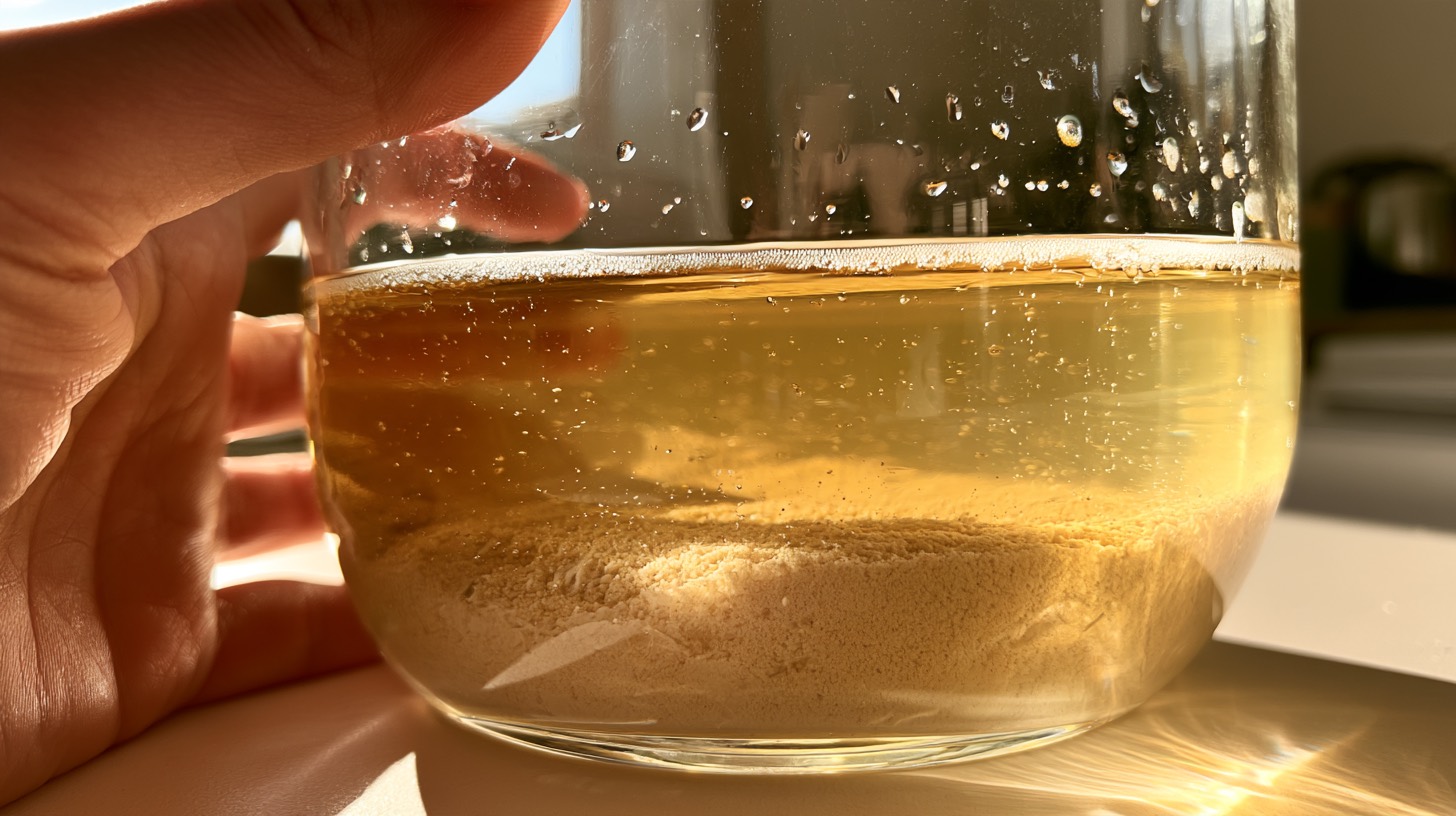
If fermentation has already finished
A persistent sulfur smell after fermentation is more concerning.
One reasonable step may be to transfer the cider away from heavy sediment, particularly after extended contact. The transfer should be gentle and avoid unnecessary splashing.
Give the cider time before evaluating it again. In some cases, the smell weakens after the sediment is removed and dissolved gas escapes. If it remains, postpone bottling. A sealed bottle will not necessarily correct the problem and may preserve or develop more persistent sulfur-related aromas.

Why we do not use copper at random
Home cidermaking advice often recommends dropping a copper coin, wire, or piece of pipe into the cider. Copper can interact with certain sulfur compounds, but a random metal object is a poor treatment method.
Coins and wires may not be made from food-safe copper, can contain coatings or other metals, and provide no control over how much copper enters the drink. They may also reduce the smell without correcting its underlying cause.
Professional copper treatments require controlled dosing and attention to residual copper levels. A household coin is not a responsible substitute for a measured treatment.
When the aroma suggests a different problem
Not every unpleasant smell is hydrogen sulfide. Solvent, nail-polish remover, vinegar, decay, sewage, and mold aromas can have different causes.
Fuzzy or colored surface growth should not be dismissed as normal yeast activity. If mold, obvious decay, or unidentified surface growth is present, tasting is not a reliable safety test.
Our order of checks
- Record the day of fermentation.
- Note the temperature of the cider and the room.
- Describe the aroma precisely and record its intensity.
- Identify the yeast strain used.
- Review the juice ingredients.
- List recent additions or changes in conditions.
- Inspect the surface and sediment.
Then observe whether the smell weakens as fermentation continues. During an otherwise normal early fermentation, time may be the right response. After fermentation, a persistent smell may justify a careful transfer followed by additional observation.
What not to do
- Do not add nutrients without considering the stage of fermentation.
- Do not place coins or wires in the cider.
- Do not conceal the smell with sugar or flavorings.
- Do not bottle a problematic cider and simply hope it will correct itself.
- Do not assume that the absence of mold makes every unpleasant aroma harmless.
- Do not inhale gas deeply from the mouth of the fermentation vessel.

The conclusion
A sulfur smell is a symptom, not a final diagnosis.
A mild rotten-egg aroma during early active fermentation may disappear on its own. A strong or intensifying smell calls for a review of temperature, yeast activity, juice ingredients, and batch history. An aroma that remains after fermentation should not be ignored before bottling.
The most useful response is neither panic nor a random remedy found online. It is an accurate record of what happened. The better the batch history, the easier it becomes to identify when the smell appeared and what may have caused it.