
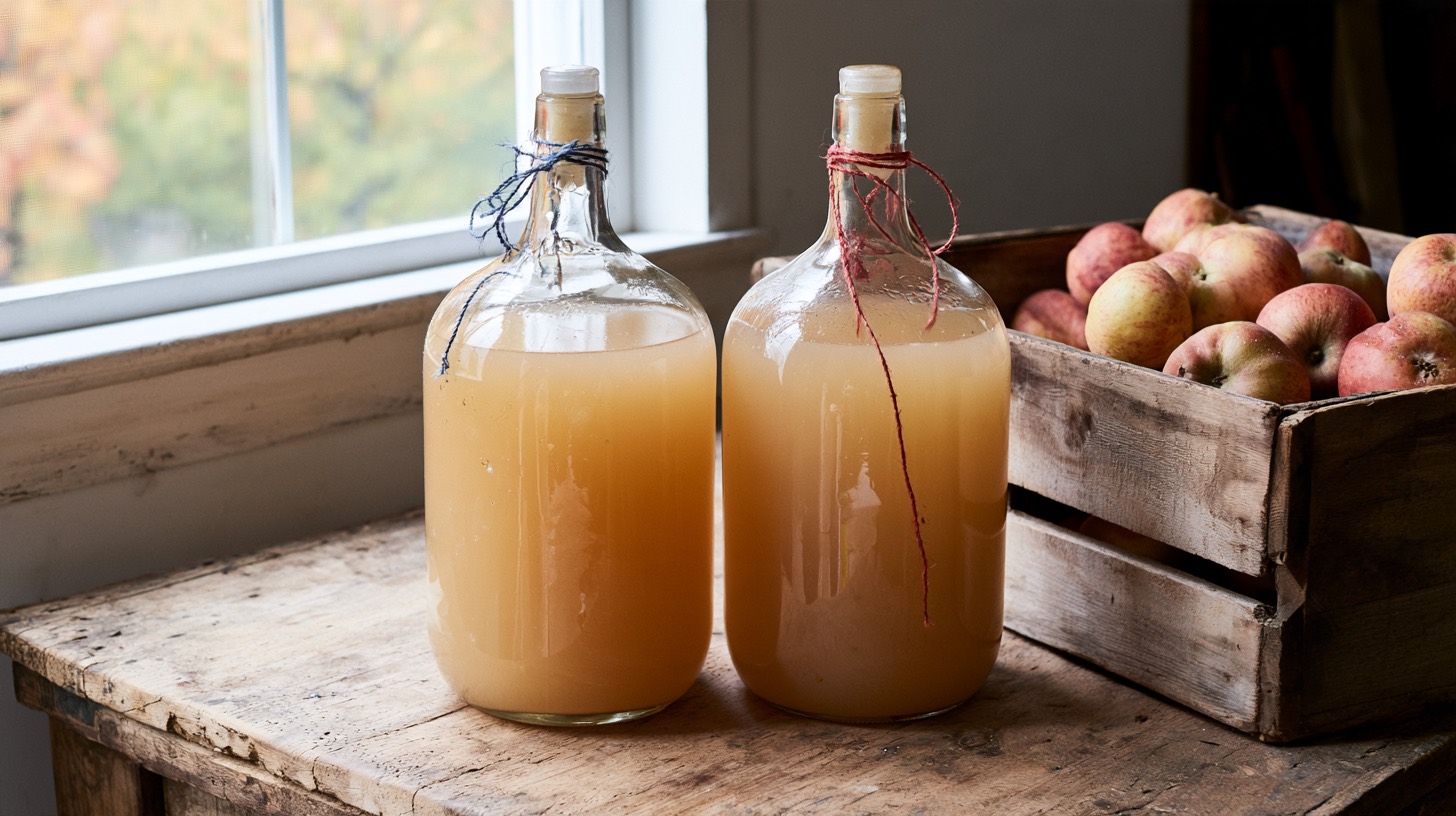
Wild yeast tends to provoke strong opinions. Some cidermakers consider it the only way to create a genuinely expressive, living cider. Others see it as an almost certain route to vinegar or a spoiled batch.
Rather than argue about it in theory, we decided to run two small fermentations under the same conditions. Only one variable was changed: the source of the yeast.
The experimental setup
We used just over 1.3 gallons of fresh, unfiltered juice pressed from unwashed apples. We deliberately left the fruit unwashed to preserve the natural microorganisms living on the skins.
The apples were carefully sorted before pressing. Any fruit showing mold, rot, or significant damage was discarded. No preservatives, sugar, or acid were added to the juice.
Before dividing it, we mixed the full volume thoroughly so that both batches received the same starting material.
| Parameter | Starting value |
|---|---|
| Total volume | 1.3 US gal (5 L) |
| Each batch | 0.66 US gal (2.5 L) |
| Original gravity | 1.048 SG |
| pH | 3.45 |
| Juice temperature | 64°F (18°C) |
The juice was transferred into two identical sanitized fermentation vessels. A measured quantity of dry wine yeast suitable for cider was added to Batch A. Nothing was added to Batch B. Its fermentation would depend on microorganisms preserved on the skins of the unwashed apples and transferred into the juice during pressing.
Both vessels were fitted with airlocks and placed side by side at 64–68°F (18–20°C).
The first 24 hours: cultured yeast takes the lead
Batch A began showing signs of activity after approximately ten hours. A thin line of bubbles appeared near the surface, followed by regular movement in the airlock.
Nothing visible happened in Batch B. The juice looked and smelled almost exactly as it had at the beginning of the experiment.
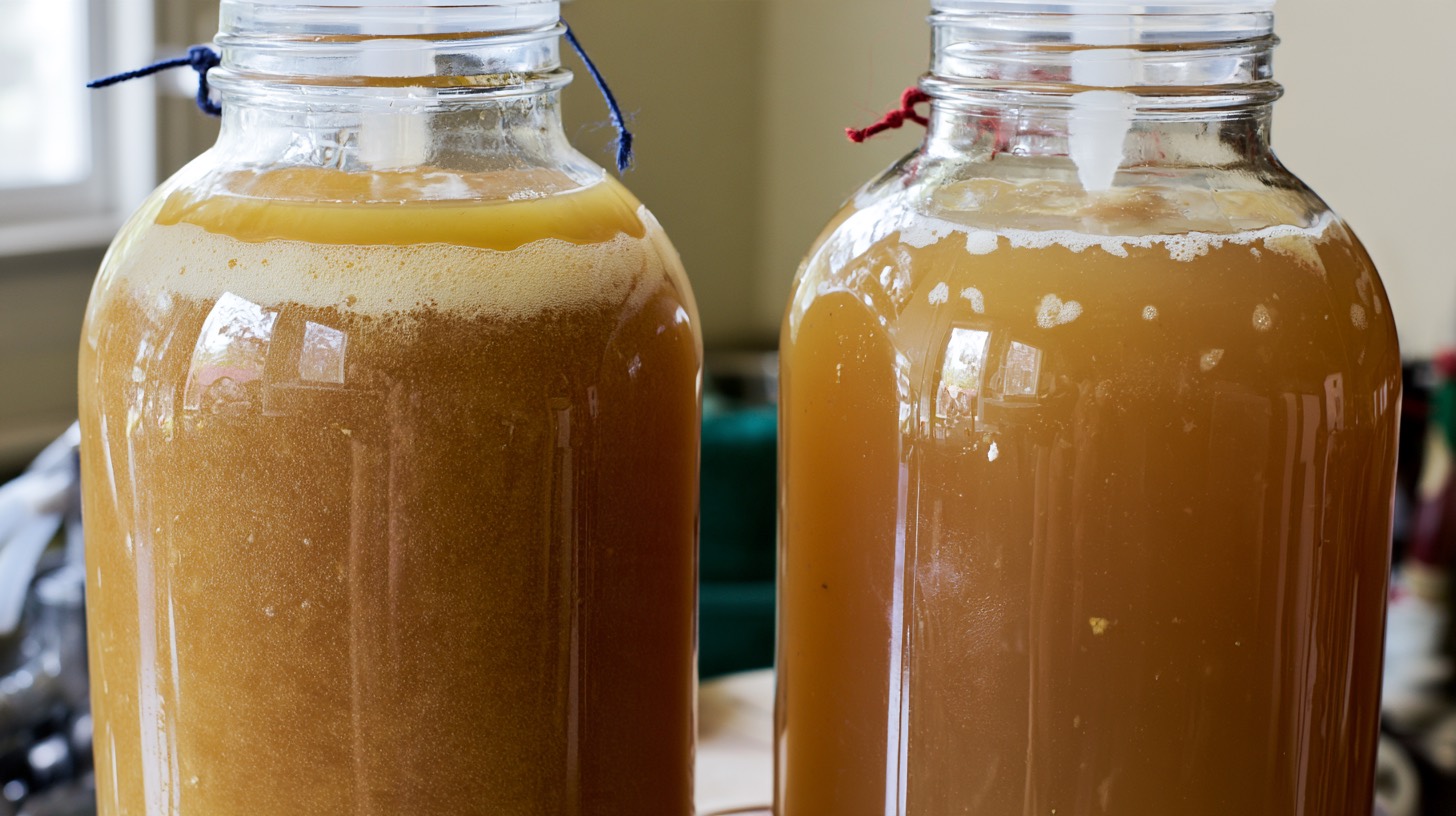
After 24 hours, the difference was obvious. A small layer of foam had formed in the batch containing cultured yeast, while the wild batch remained still.
Day three: the wild batch wakes up
The first bubbles appeared in Batch B toward the end of the second day. By the third day, small islands of foam had formed on the surface, and gas had begun moving through the airlock.
Batch A smelled of clean apple, yeast, and fresh bread dough. Batch B was more complex, with notes of apple skin, cut grass, and a faint sharpness.
There were no signs of mold, colored surface growth, or putrid odors. Had any of those appeared, we would have stopped the experiment. An unknown fermentation is not worth saving at any cost.
Day seven: different speeds
| Day | Batch A: cultured | Batch B: wild |
|---|---|---|
| 0 | 1.048 SG | 1.048 SG |
| 3 | 1.030 SG | 1.043 SG |
| 7 | 1.008 SG | 1.025 SG |
| 14 | 1.000 SG | 1.006 SG |
| 21 | 1.000 SG | 1.002 SG |
By day seven, Batch A was already close to dry. Batch B was still changing actively, although it was progressing much more slowly.
The cultured batch gradually became clearer, while the wild batch remained cloudy. Its sediment looked looser and less uniform. We did not try to accelerate either fermentation by raising the temperature.
Day fourteen: the first cautious taste
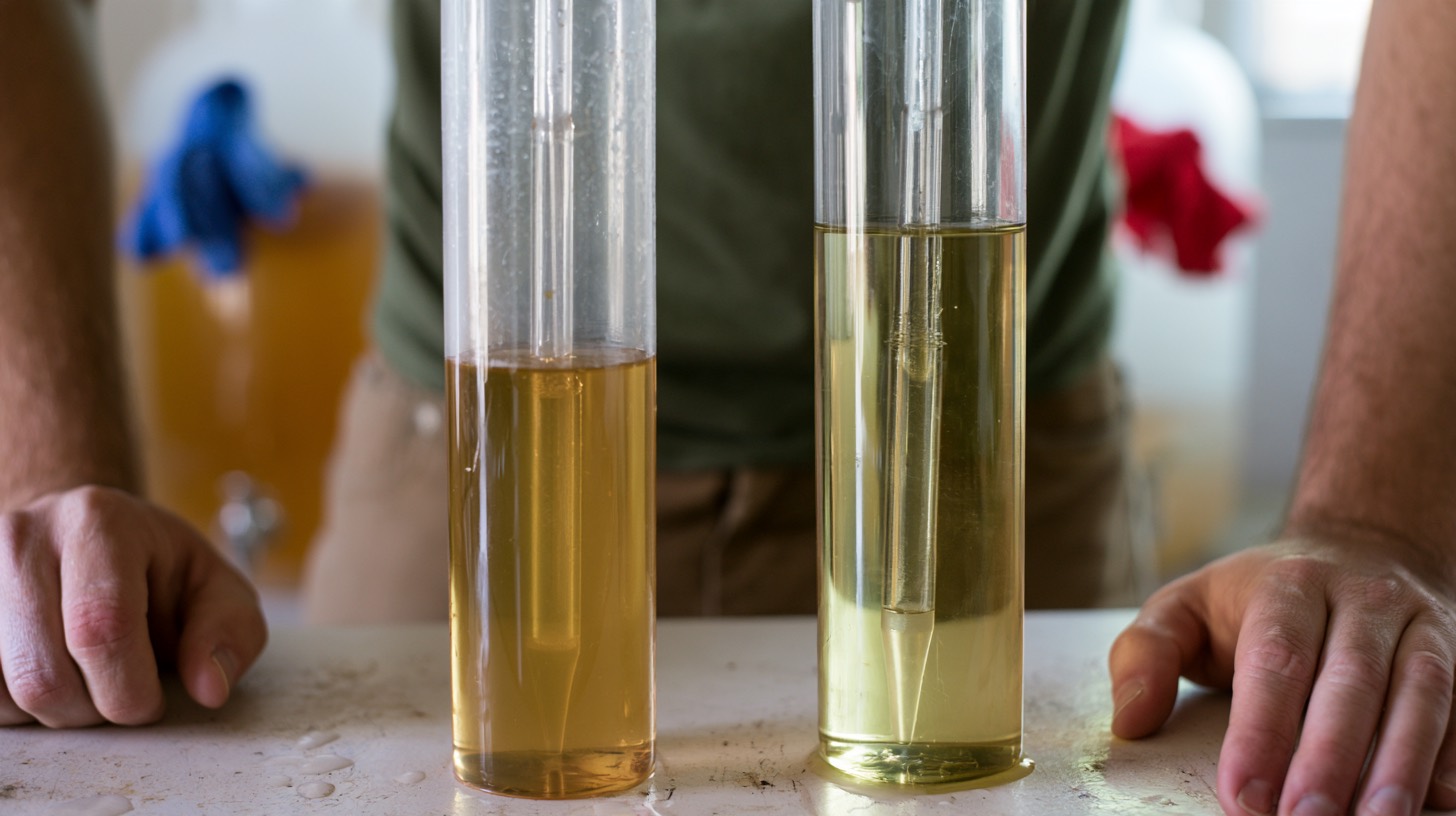
After two weeks, the gravity of Batch A had stabilized at approximately 1.000 SG. Its flavor was dry, clean, and fairly direct. The apple character was clear, although the aroma remained restrained.
Batch B had reached approximately 1.006 SG and was still fermenting slowly. Its aroma was more expressive, with apple skin, dried herbs, and something resembling lemon peel.
A gentle astringency had appeared in the flavor. Alongside it was a slight roughness that was absent from the cultured batch. At this stage, the wild cider seemed more interesting but less composed.
Day twenty-one: the final comparison
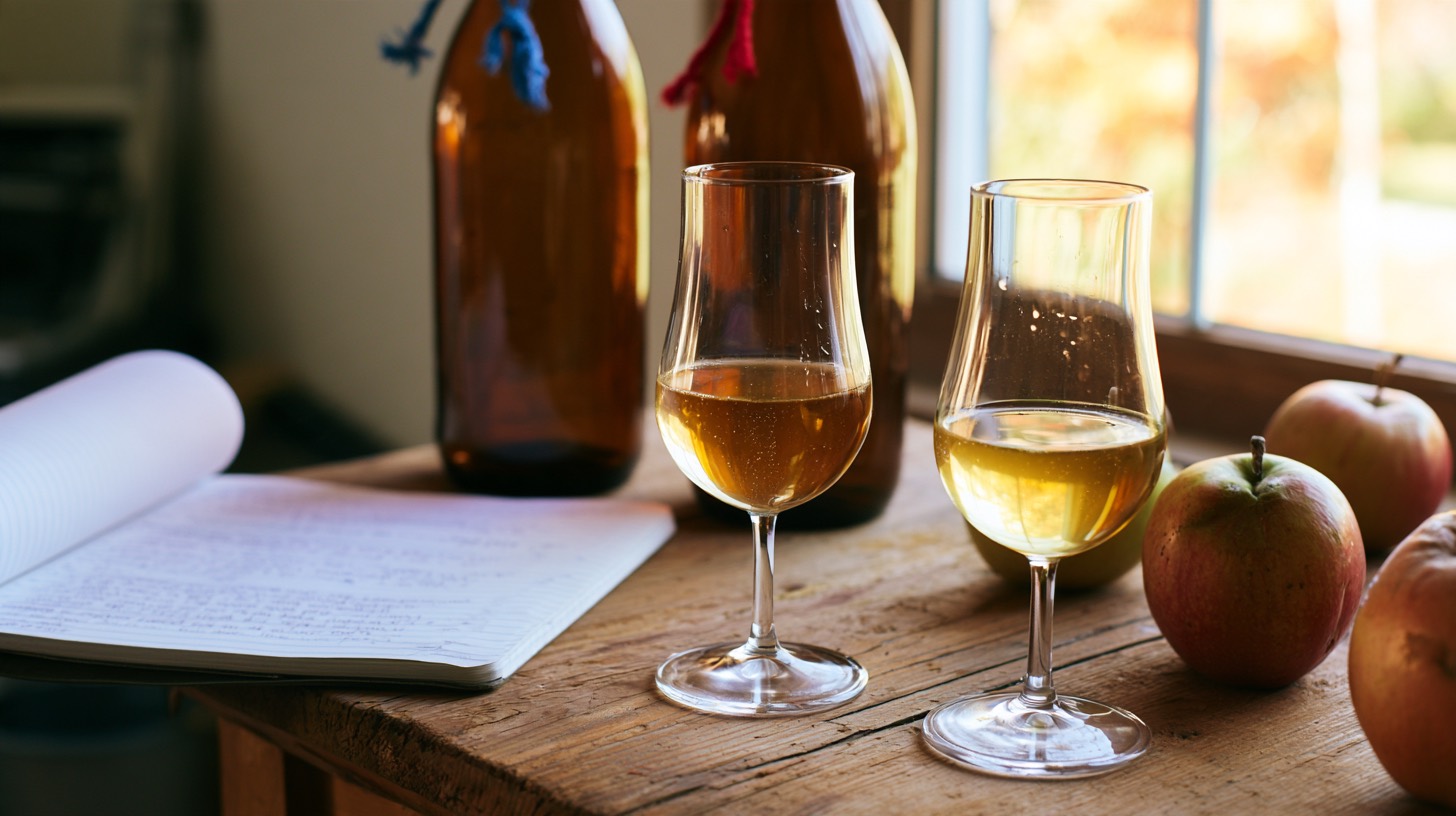
By day twenty-one, the readings for both batches had remained stable for several days. We transferred the cider away from the sediment and tasted both samples at the same temperature.
Batch A: cultured yeast
The aroma was clean and restrained. Fresh apple dominated, accompanied by a light pear note. The flavor was dry, even, and predictable. Acidity was moderate, and the finish was relatively short.
Its main strength was precision. There was nothing especially surprising about the cider, but there were no obvious faults either.
Batch B: wild yeast
The aroma was more intense, with apple skin, grass, citrus peel, and a faint earthy note. The flavor was more astringent and less even. The middle of the sip was more interesting than in the cultured batch, but the finish was rougher.
The wild cider had more individual character. At the same time, it raised more questions. Some of its qualities might become strengths after aging, or they might become more prominent and disturb the balance.
Can we name a winner?
Cultured yeast won in terms of speed, cleanliness, and predictability. It began working quickly, fermented the sugar evenly, and produced a result that was easy to understand.
Wild fermentation produced a more complex aroma, but it required more time and attention. Its progress was harder to interpret at every stage.
If the objective is a repeatable cider with a controlled process, cultured yeast is the more reliable option. If the aim is to explore the character of a particular juice—and uncertainty is acceptable—wild fermentation may produce a more unusual result.
One successful experiment, however, does not guarantee that the next wild fermentation will behave in the same way.
What we will change next time
- Increase the volume of each batch.
- Prepare two identical vessels for each treatment.
- Record the temperature every day.
- Measure changes in pH as well as gravity.
- Conduct a blind tasting.
- Reserve part of each cider for several months of aging.
- Compare the cultured batch with a prepared wild starter rather than relying entirely on spontaneous fermentation.
The most important conclusion was simple: wild yeast does not necessarily make better or worse cider. It creates a less predictable process.
Cultured yeast helped us control the batch. Wild yeast forced us to observe it more carefully. That is precisely why the next experiment is already planned.