
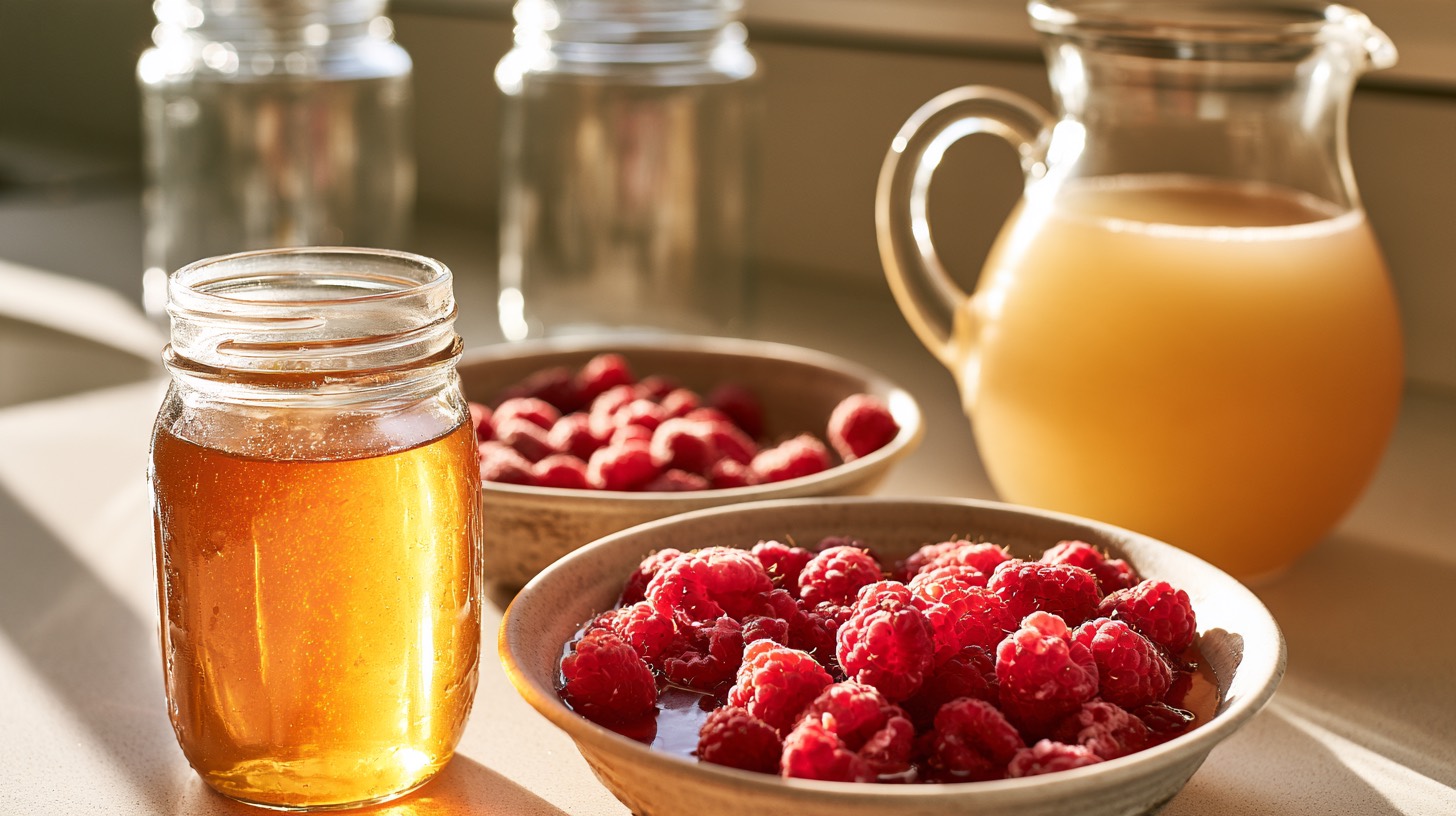
Raspberries seem ideal for melomel: intense aroma, noticeable acidity, and vivid color. Fermentation, however, can transform their character almost completely.
To find the better time for the addition, we split one honey-and-apple base into two equal batches. The timing of the fruit was the only intentional difference.
What is a melomel?
A melomel is a mead fermented with fruit or berries. For this batch, we used wildflower honey, unfiltered apple juice, and frozen raspberries.
The apple juice was not intended to turn the drink into a honey-sweetened cider. It supplied acidity, additional structure, and more complexity than water alone.
The experimental base
The total volume of the must was approximately 2 US gallons. After mixing, it was divided evenly between two sanitized fermentation vessels.
- 1.5 US gallons of unfiltered apple juice
- 0.5 US gallon of water
- 3 pounds of wildflower honey
- Wine yeast
- Yeast nutrients
- Two 1-pound portions of frozen raspberries
The honey was dissolved in some of the room-temperature water. We did not boil the must because strong heat would have removed much of the honey’s aroma.
Both batches received equal amounts of yeast and nutrients. Only the timing of the raspberries changed.
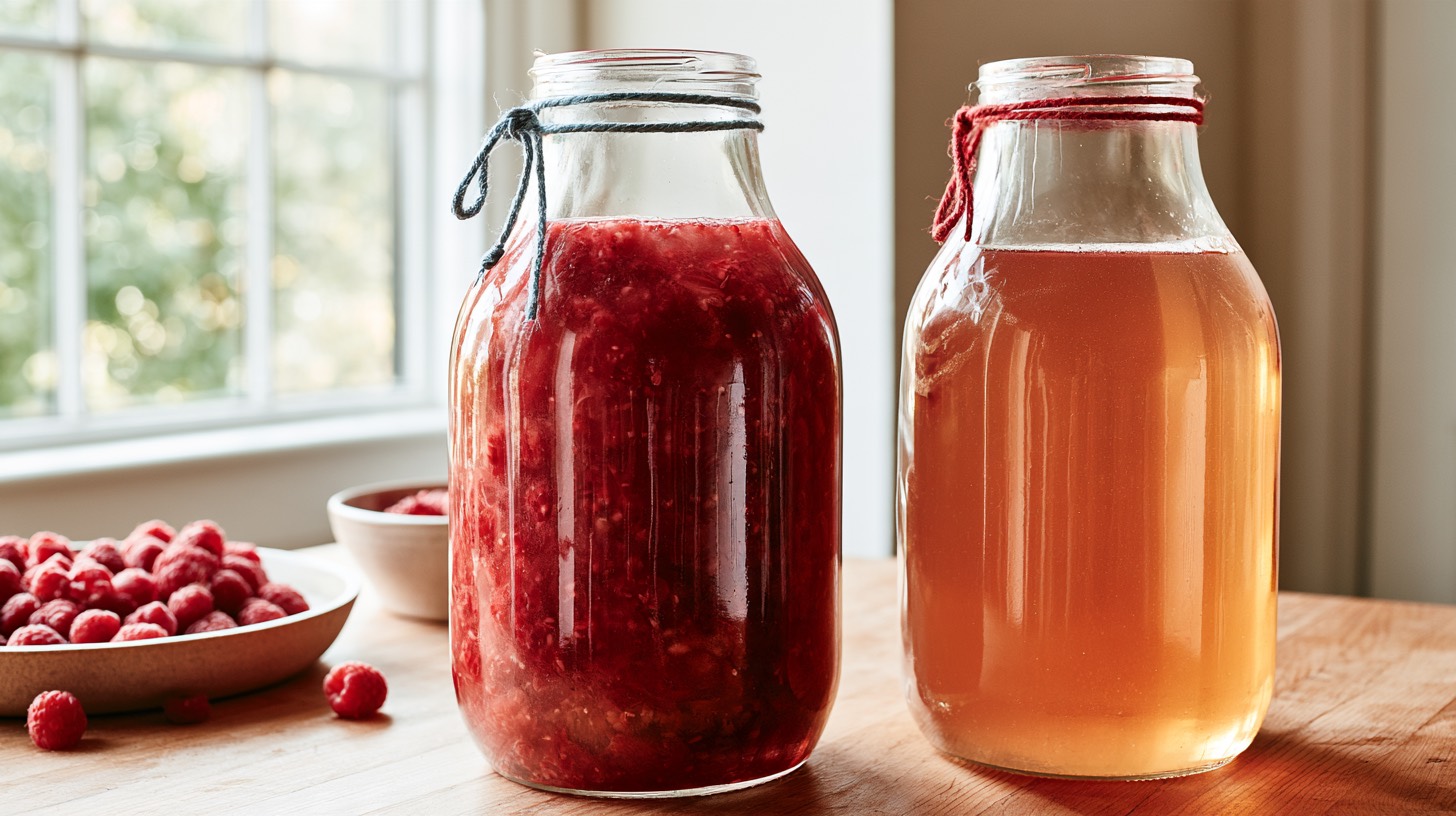
Batch A: raspberries added on day one
The thawed raspberries went into the first batch at the same time as the yeast.
This was the more dramatic-looking batch during the first 24 hours. The liquid quickly turned deep raspberry red, and a thick layer of fruit pulp rose to the surface. The fresh-raspberry aroma was intense.
After several days, that aroma began to change. Fresh fruit gave way to darker, more wine-like notes, while the color shifted from bright red toward muted burgundy.
Active fermentation continually moved the fruit pulp through the liquid. It created a large amount of loose sediment and caused noticeably greater losses during the first transfer.
Batch B: raspberries added later
The second batch fermented without fruit for the first ten days. Once the most active phase had subsided, we transferred the young melomel off the main sediment and added the thawed raspberries together with the juice released during thawing.
Fermentation briefly became more active because the berries still contained sugar, but it remained much calmer than the initial fermentation.
The color developed gradually. After several days, this batch looked brighter than Batch A, and its aroma more closely resembled freshly crushed raspberries.
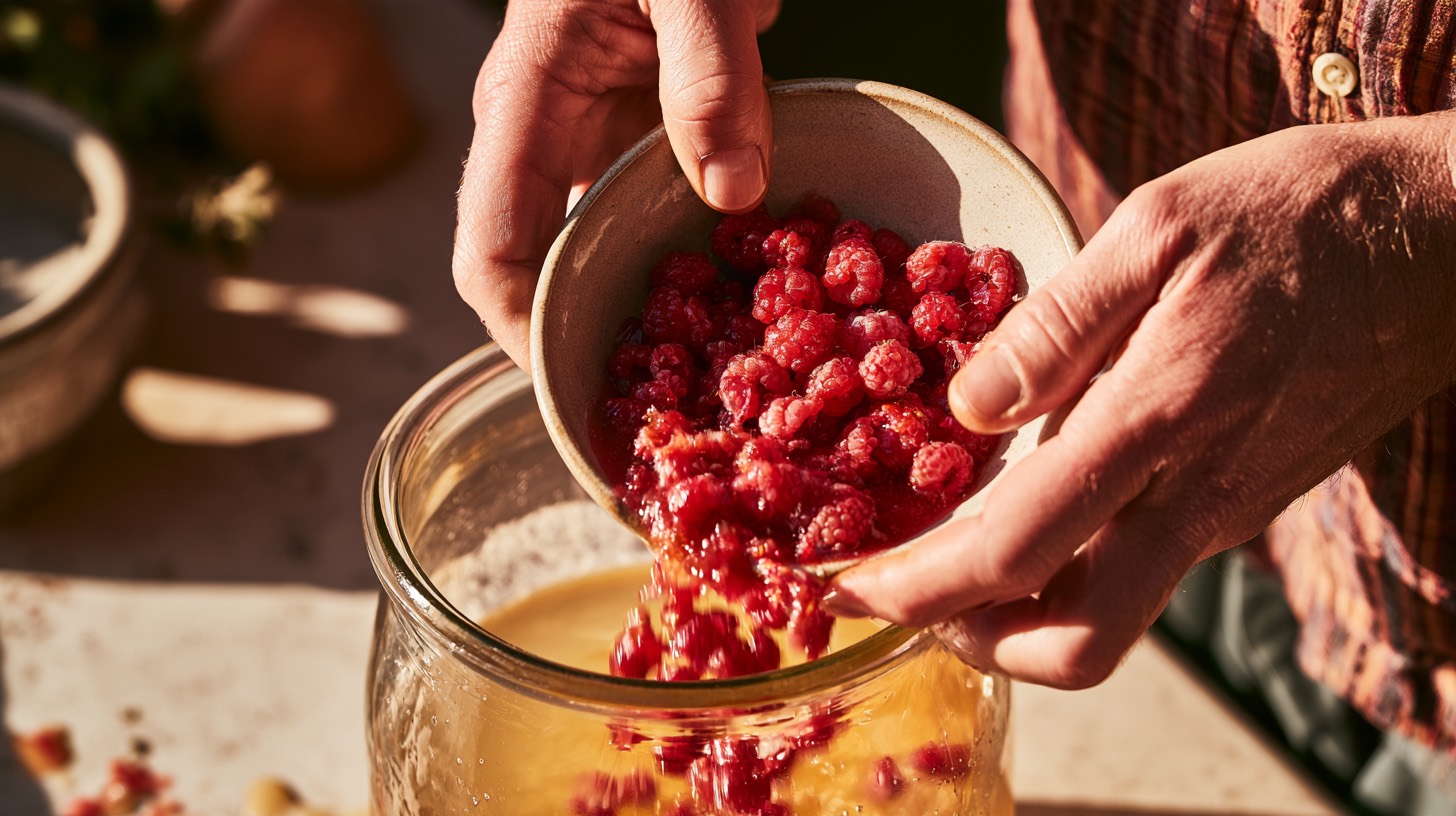
Eight days on the fruit
The raspberries remained in Batch B for eight days. We then transferred the melomel again, leaving most of the seeds and pulp behind.
Late fruit additions have a tradeoff: the berries exert a stronger influence and can become overpowering more easily. By the eighth day, increasing tannic dryness from the raspberry seeds was already noticeable.
The results after six weeks
Batch A
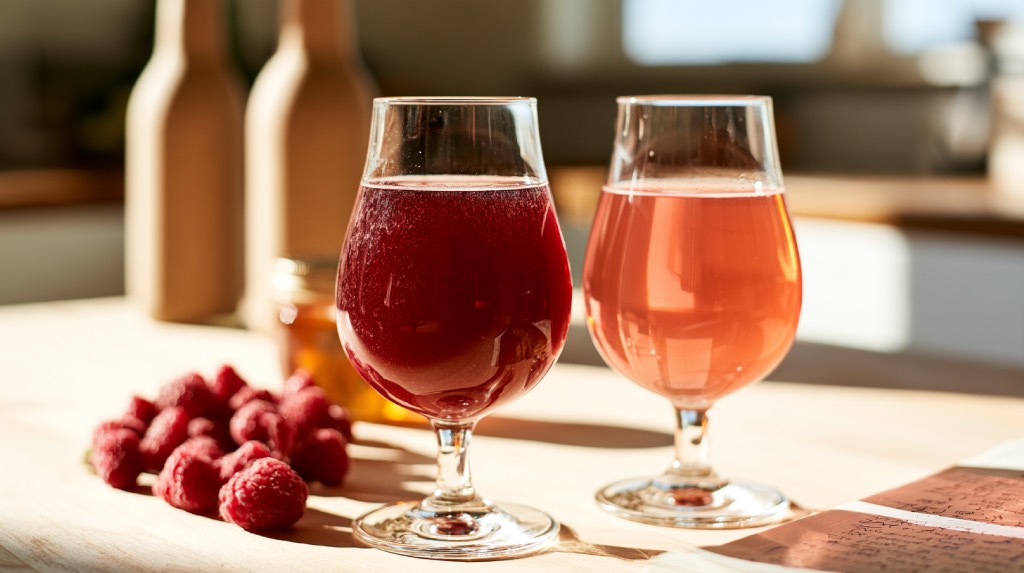
The melomel made with the early addition was darker and seemed drier. Its aroma contained apple skin, tart berries, and a faint wine-like quality. Raspberry was recognizable, but no longer dominant.
The flavor felt more integrated. Honey, apple, and raspberry came together as a single drink, although most of the fresh-fruit character had disappeared.
Batch B
The later addition retained a much brighter raspberry aroma. Its color was lighter but more vivid. Berry acidity was more noticeable, while the honey base remained a distinct layer in the flavor.
This batch seemed considerably fruitier even though both vessels received exactly 1 pound of raspberries.
The unexpected difference
The clearest practical difference appeared during transfer rather than tasting.
In Batch A, loose sediment occupied much of the bottom of the vessel. The raspberries had broken apart during active fermentation, making it difficult to separate clear liquid from the pulp.
In Batch B, the fruit layer was denser and easier to leave behind. Less melomel was lost during the transfer.
Which version was better?
Adding raspberries at the beginning appears better suited to a melomel intended for longer aging and a more integrated flavor. Primary fermentation softens the sharper fruit notes and connects the raspberry more thoroughly with the honey and apple.
For a vivid fresh-raspberry aroma, adding the fruit after primary fermentation is the better approach. The drink should be tasted regularly while it remains on the berries. In this batch, approximately one week appeared to be the ideal contact time.
We preferred the second version. It was less restrained and perhaps less complex, but it smelled unmistakably like raspberries rather than a generic mixture of red fruit.
What we will change next time
Next time, we will again reserve most of the raspberries until after primary fermentation, but divide the fruit into two additions:
- A small portion at the beginning for depth and integration.
- Most of the fruit after the first transfer for color and fresh aroma.
We will also place the berries in a fine food-safe mesh bag. That should make the next transfer easier and reduce the loss of finished melomel.
The experiment demonstrated a simple point: the amount of fruit is only half the recipe. The moment it enters the drink matters just as much.